
Astronomy
Astronomy (from the Greek ἀστρονομία from ἄστρον astron, "star" and -νομία -nomia from νόμος nomos, "law" or "culture") means "law of the stars"
It is truly so sad that today with so many city lights we cannot see the beauty of the night sky.It is true.In our modern world by using so many lights we cause light polution and because of that we see only a very little amount of stars when we look up with our own eyes.We need telescopes and to be really far away from light sources.That is why ancient people were so obsessed with the stars.They could see thousands of them with the naked eye.And they wanted to know how and why they are always there.
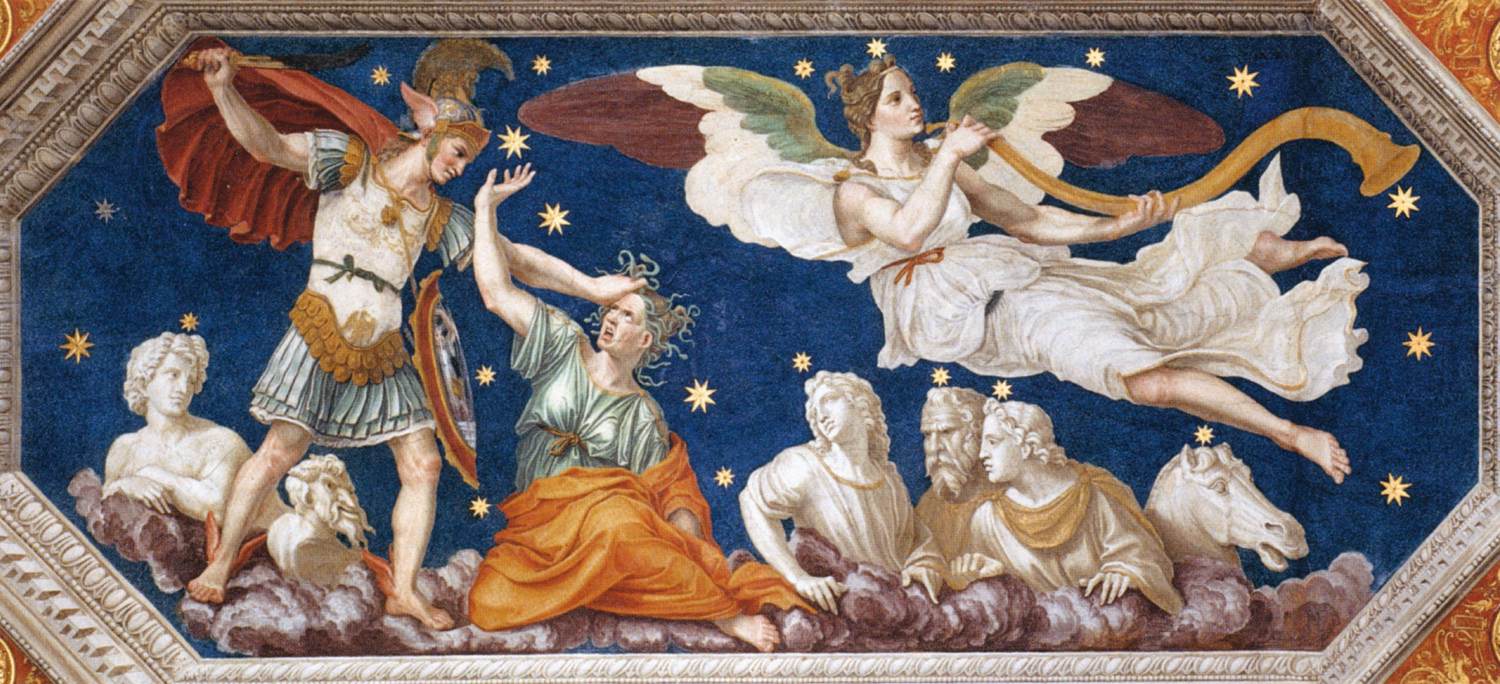
As a child I was always amazed by the moon.It wasn't always in the sky but when it was I was so stunned by looking at it.It was the only different and unique thing in the night sky.The stars looked the same.I also remember a book that my parents got me about space. and when I read it I was so blown away.I couldn't completely understand it fully but the pictures stuck to my head.The beauty of our galaxy.The vibrant colors of the planets.It was so majestic and I was so confused that I couldn't see them in the night sky even though in the book it said that the universe is filled with trillions of stars so bright we can see them with the naked eye.And then I forgot about it as a normal kid would do.Time passed,I was getting older and so I was studying,working,playing videogames,sketching.I was reading articles about space and science but I forgot the universe it is just outside.All I had to do was just to look up.And so I did.
The Universe
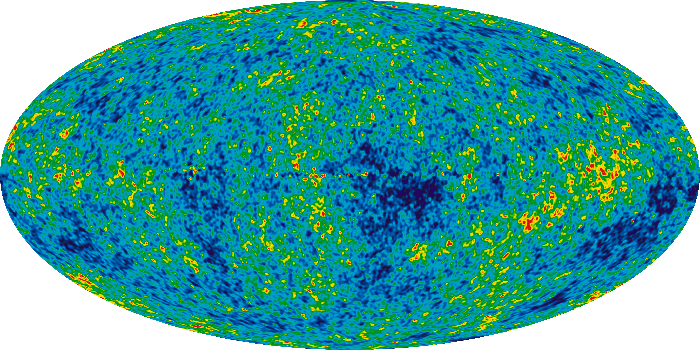
The word universe derives from the Old French word univers, which in turn derives from the Latin word universus, meaning ‘combined into one’.A term for universe among the ancient Greek philosophers from Pythagoras onwards was τὸ πᾶν (tò pân) ‘the all’, defined as all matter and all space, and τὸ ὅλον (tò hólon) ‘all things’, which did not necessarily include the void.Another synonym was ὁ κόσμος (ho kósmos) meaning ‘the world, the cosmos‘.*Whops.This is the word for my brand again.(smiles with little pride)*.Like it or not we came to this conclusion.We live in a universe.No.We have to live in a universe.Elsewise we live in a void? Inside an egg? Ok,Let’s start with the basics.We all know the “Big Bang” term.Even though it is a simplification of the theory of the existence of matter and the creation of everything,let’s go with the bang.This Big Bang sparkled this eggish thingy below.Yes.This picture (of course it is a loose optical representation) is the universe.A lot of mathematical equations,trust me A LOT,to show this.Not too pretty or digestible but it is really impressive.Impressive? It looks like a thermal picture of a frozen egg.Not the universe.Well that’s Astronomy.Not pretty but pragmatic.So the Universe.We think that It contains everything we can and cannot observe outside our planet.And it expands.Like a balloon.*Yeah in Astronomy they use many metaphors because it is difficult to understand something that you/we cannot actually see.*So,the universe is more of a balloon than an egg.Those green dots are galaxies.In those galaxies there are black holes.And around black holes there are stars.And around stars they may be planets.And in the planets they may be creatures.Like us.Humans.Humanoids.Homo sapiens.No? Maybe? Everything is possible in an limitless universe.
Milky Way Galaxy
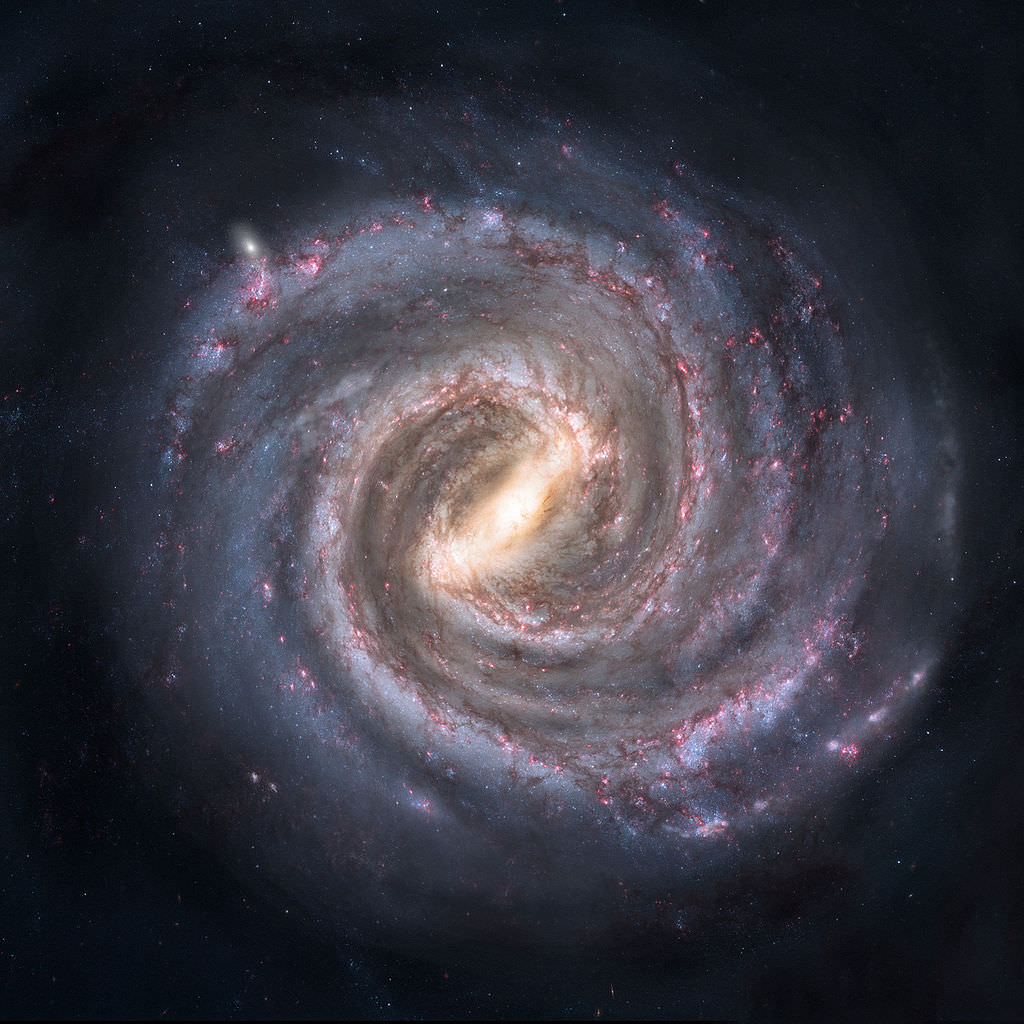
The term Milky Way is a translation of the Latin via lactea, from the Greek γαλαξίας κύκλος (galaxías kýklos), meaning “milky circle”.From Earth, the Milky Way appears as a band because its disk-shaped structure is viewed from within. Galileo Galilei first resolved the band of light into individual stars with his telescope in 1610.Yes we “live” inside this spiral “disk” and we are a very very very little tiny dot inside this disk.The galaxy itself is a really huge concept to understand with our simple brains but it is really important to know it.As a Greek/Hellinas myself I knew that my ancestors started to study the stars so thats why many names and terms derive from greek/hellinika.That reflects to their culture as many historians and philosophers are more interested on nature and the universe than humans and their habits.Truth be told as I am studying Astronomy I do feel humble and “little” compared to the many things I learn every second about space.And trust me the things we do know about our universe compared to what we do not know is scary.I think it’s the comparisons of scale that in astronomy is needed that makes us humans rethink about what is important in reality.
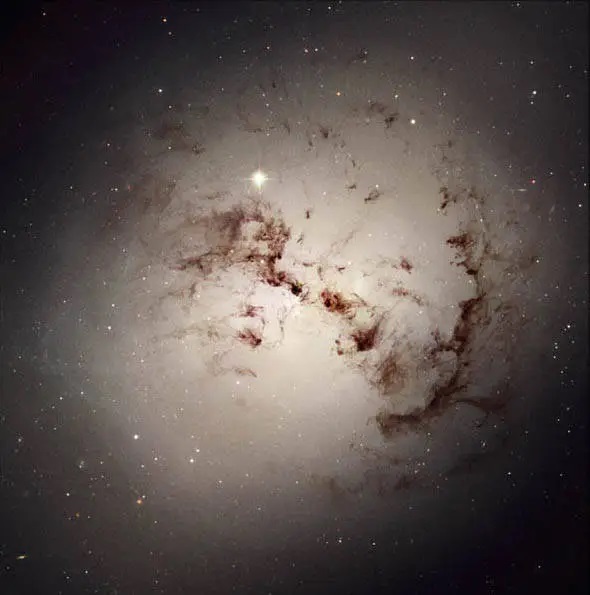
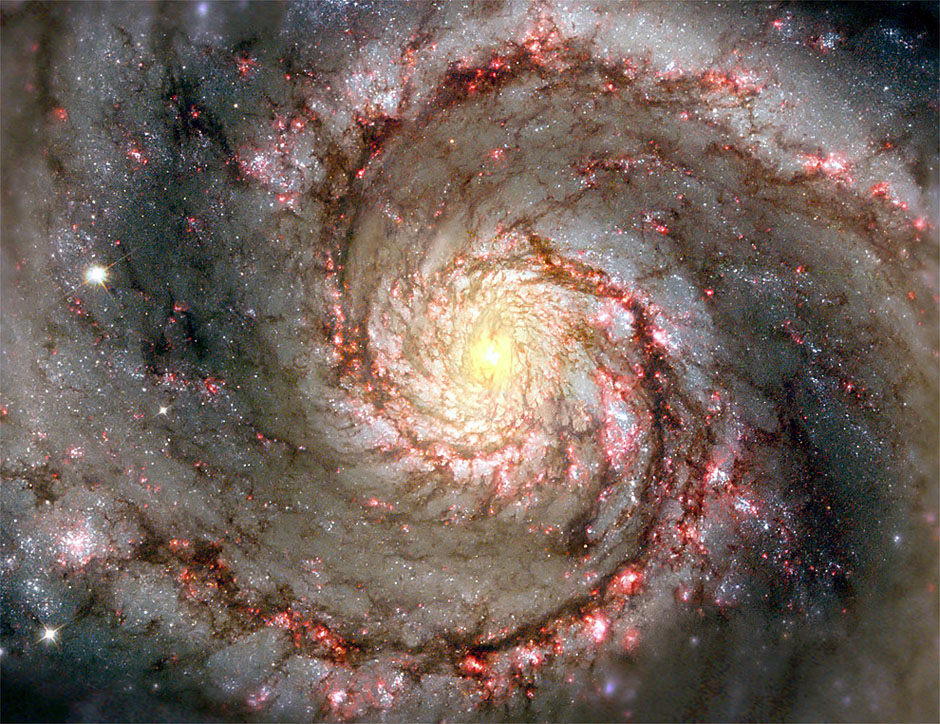
Back to the Galaxies.Yes there are actually many Galaxies.Not only our Milky Way.It is estimated to be more than a trillion Galaxies in our universe.Yeah I know pretty mindblowing.But that’s space.It has no limits.No boundries.No Beginning.No End.Wait,no beginning,no end?. We will come back to that.So there are two morphologies (μορφή=shape + λόγος=law).
1.Elliptical :These galaxies have an ellipsoidal profile, giving them an elliptical appearance regardless of the viewing angle. Their appearance shows little structure and they typically have relatively little interstellar matter. Consequently, these galaxies also have a low portion of open clusters and a reduced rate of new star formation. Instead, they are dominated by generally older, more evolved stars that are orbiting the common center of gravity in random directions. The stars contain low abundances of heavy elements because star formation ceases after the initial burst.
2.Spiral
Galaxies resemble spiraling pinwheels. Though the stars and other visible material contained in such a galaxy lie mostly on a plane, the majority of mass in spiral galaxies exists in a roughly spherical halo of dark matter which extends beyond the visible component, as demonstrated by the universal rotation curve concept.
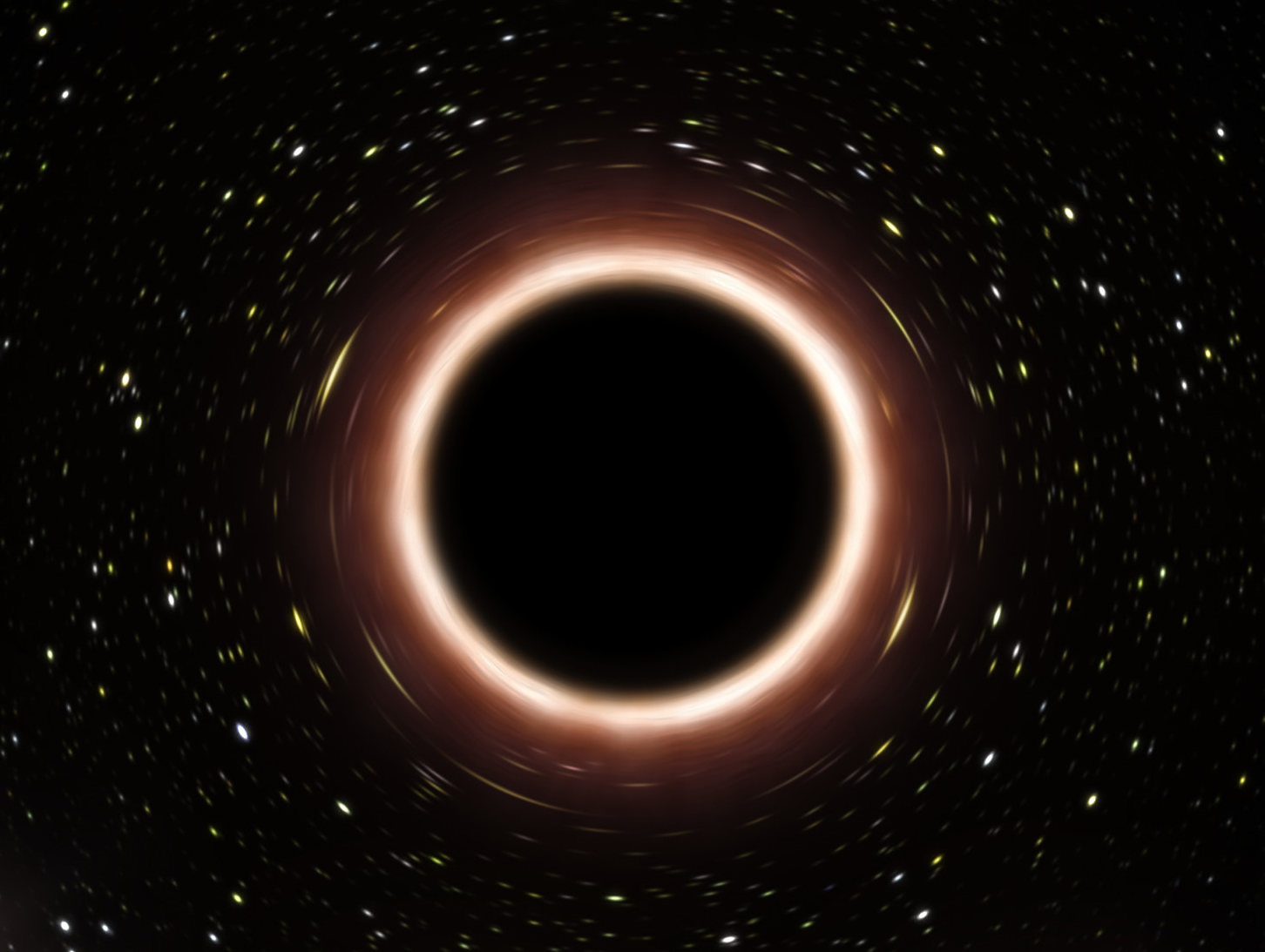
Every galaxy has stars and a center.In the center of the galaxy a black hole is formed.It sounds scary.Trust me it is.A black hole is a region of spacetime where gravity is so strong that nothing, including light and other electromagnetic waves, is capable of possessing enough energy to escape it.[2] Einstein‘s theory of general relativity predicts that a sufficiently compact mass can deform spacetime to form a black hole.[3][4] The boundary of no escape is called the event horizon. A black hole has a great effect on the fate and circumstances of an object crossing it, but it has no locally detectable features according to general relativity.[5] In many ways, a black hole acts like an ideal black body, as it reflects no light.Yeah and our galaxy has one black hole too.We can’t escape it.And the black hole gets bigger in time.It shallows everything around it.AND A SUPERMASSIVE BLACK HOLE EXISTS IN THE CENTER OF OUR UNIVERSE.WE ARE DOOMED TO GET SHALLOWED.Ok I made it too dramatic,I will stop.Well black holes are indeed very weird and mysterious and the more we know about them,we uncover more about our universe.They are actually one of the most important phenomena that will get us to the truth and understanding of the universe.
How are black holes formed?
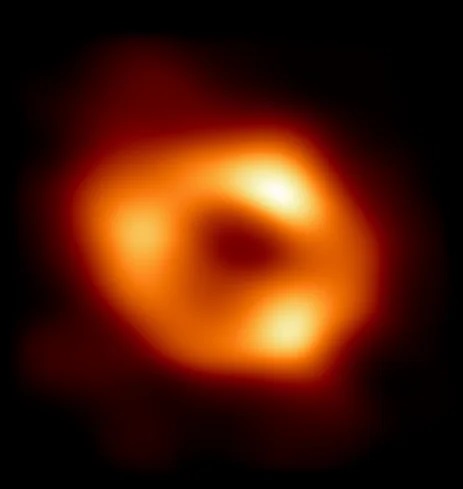
Black holes of stellar mass form when massive stars collapse at the end of their life cycle. After a black hole has formed, it can grow by absorbing mass from its surroundings.Supermassive black holes of millions of solar masses (M☉) may form by absorbing other stars and merging with other black holes, or via direct collapse of gas clouds. Basiclly black holes are dead stars.A star is white and when it ‘dies’ it gets black.How poetic the universe is.Ok the black hole does not have ‘black’ color,we call it black because it doesn’t absorb light.And because space is the absence of light,we can call it transparent hole,but because no light is reflecting,it ‘reflects’ absence=black.Case solved.Furthermore 2017, astronomers set out to observe the invisible heart of the massive galaxy Messier 87, or M87, near the Virgo galaxy cluster 55 million light-years from Earth which confimed that black holes actually exist.
If they say,Who cares if one more light goes out?
In the sky of a million stars
It flickers, flickers
Who cares when someone’s time runs out?
If a moment is all we are
We’re quicker, quicker
Who cares if one more light goes out?
Well I do -One More Light by Linkin Park-
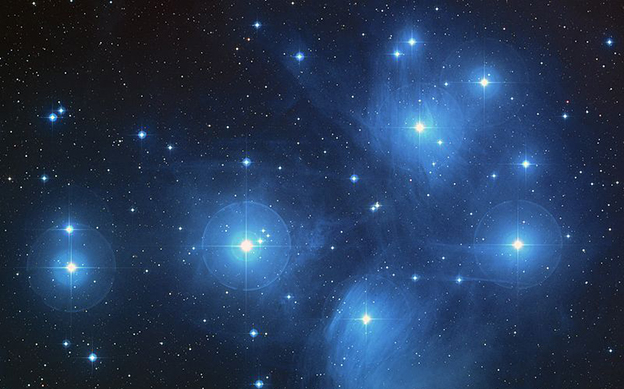
Like we said before every galaxy has stars.Lots of them.A star is a luminous spheroid of plasma held together by self-gravity.The observable universe contains an estimated 1022 to 1024 stars. Only about 4,000 of these stars are visible to the naked eye—all within the Milky Way galaxy.The most prominent stars have been categorised into constellations and asterisms, and many of the brightest stars have proper names.A star’s life begins with the gravitational collapse of a gaseous nebula of material largely comprising hydrogen, helium, and trace heavier elements. Its total mass mainly determines its evolution and eventual fate. A star shines for most of its active life due to the thermonuclear fusion of hydrogen into helium in its core. This process releases energy that traverses the star’s interior and radiates into outer space. At the end of a star’s lifetime as a fusor, its core becomes a stellar remnant: a white dwarf, a neutron star, or—if it is sufficiently massive—a black hole.As you have guessed our Sun is a star.I still can’t believe these numbers.100.000.000.000.000.000.000 stars and ever more exist in the obeservable universe.I feel so little and insignificant compared to the stars,the galaxies,the black holes.And when we look an the nightsky we see tiny nuclear reactors everywhere.Wow(In Keanu Reeves voice).Aftert reading all of this a simple question comes to mind.Do the stars effect us with some kind of force right here on earth? They do release energy after all.Where doest that energy go? These questions unfortunately split humanity in two.
Astronomy or Astrology?
I know I have to adress this taboo subject and I will be as brief as I can.Many cultures have attached importance to astronomical events, and the Indians, Chinese, and Maya developed elaborate systems for predicting terrestrial events from celestial observations. A form of astrology was practised in the Old Babylonian period of Mesopotamia, 1800 BCE.Vedāṅga Jyotiṣa is one of earliest known Hindu texts on astronomy and astrology (Jyotisha). The text is dated between 1400 BCE to final centuries BCE by various scholars according to astronomical and linguistic evidences. Chinese astrology was elaborated in the Zhou dynasty (1046–256 BCE). Hellenistic astrology after 332 BCE mixed Babylonian astrology with Egyptian Decanic astrology in Alexandria, creating horoscopic astrology. Alexander the Great’s conquest of Asia allowed astrology to spread to Ancient Greece and Rome. In Rome, astrology was associated with “Chaldean wisdom”.As science progressed and particularly in the Renaissance period during the crisis of the Late Middle Ages and conventionally ends by the 1600s Astrology lost the “scientific” aspect and became more of a belief system/pseudoscience.
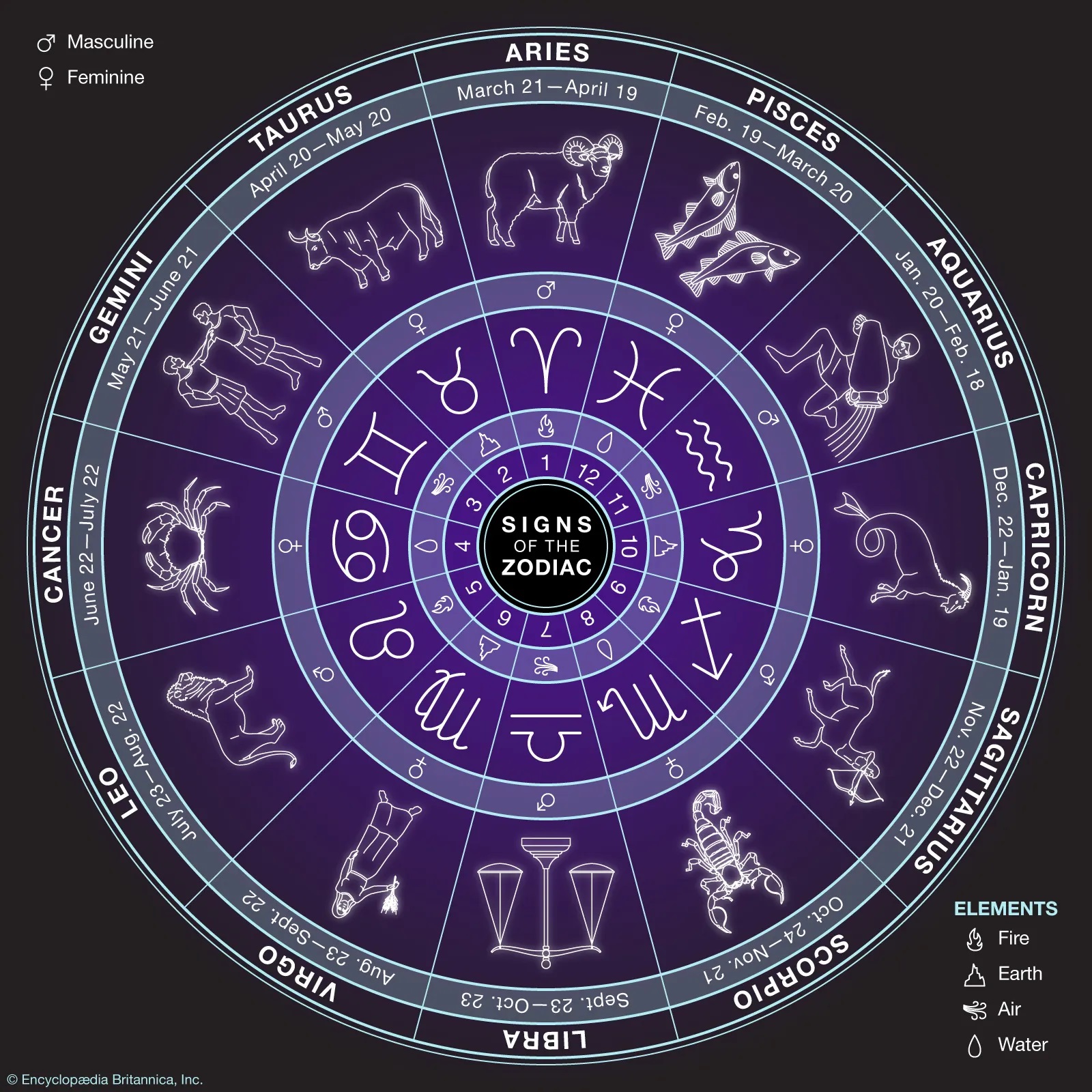
To put it simply there are no mathematics or other scientific methods that prove any phenomena ascribed to Astrology.In contrast,Astronomy is a natural science that studies celestial objects and the phenomena that occur in the cosmos. It uses mathematics, physics, and chemistry in order to explain their origin and their overall evolution.The one thing that Astronomy “borrowed” from Astrology are the names of constalations of the stars which was really usefull for the scientists not to come up with different names even though there are still so many stars to explore and name them.Today this debate is closed but still many people believe in the zodiacs just to feel important or loved.Of course like I stated previously I do love the humility that Astronomy gives me so no I do not concent with the concept of Astrology.End of story let’s talk about more important things.
Solar System vs Geocentric System
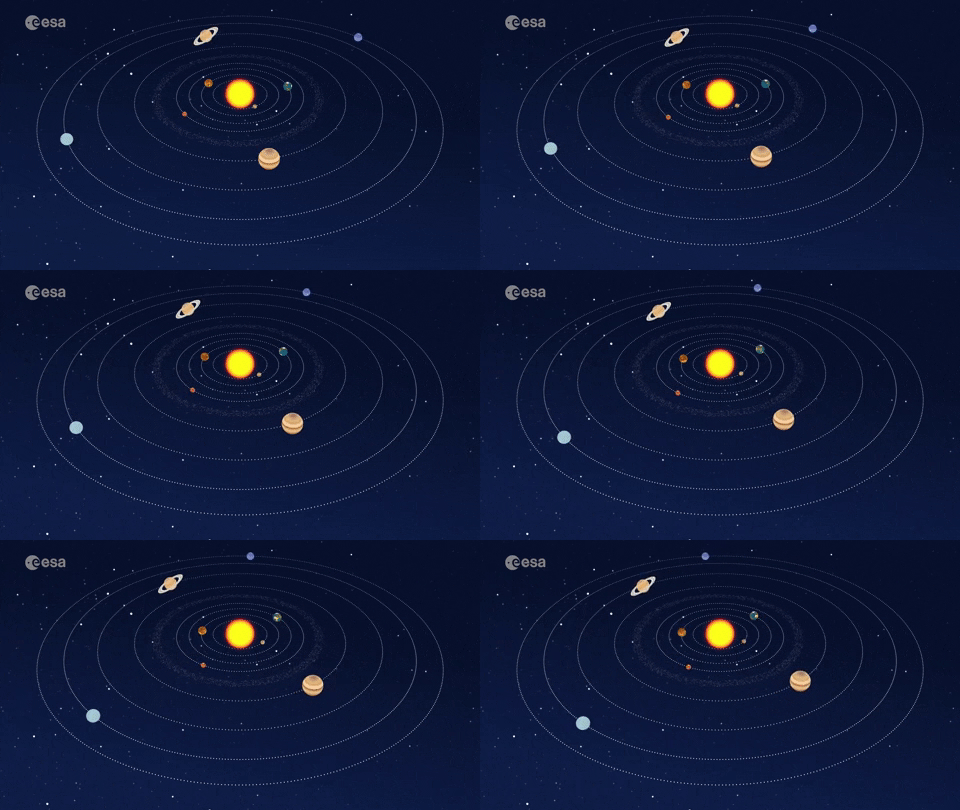
The Heliocentric system is a superseded astronomical model in which the Earth and planets revolve around the Sun at the center of the universe.The notion that the Earth revolves around the Sun had been proposed as early as the third century BC by Aristarchus of Samos, who had been influenced by a concept presented by Philolaus of Croton (c. 470 – 385 BC). In the 5th century BC the Greek Philosophers Philolaus and Hicetas had the thought on different occasions that the Earth was spherical and revolving around a “mystical” central fire, and that this fire regulated the universe.In medieval Europe, however, Aristarchus’ heliocentrism attracted little attention—possibly because of the loss of scientific works of the Hellenistic period.
It took very long time to decide where if we (earth) move around space or all the things around us did.More specifically the Heliocentrism and Geocentrism where the two finite concepts of the ancient times.As the names suggest the Geocentic System Under most geocentric models,the Sun,Moon,stars,and planets all orbit Earth. The geocentric model was the predominant description of the cosmos in many European ancient civilizations, such as those of Aristotle in Classical Greece and Ptolemy in Roman Egypt, as well as during the Islamic Golden Age.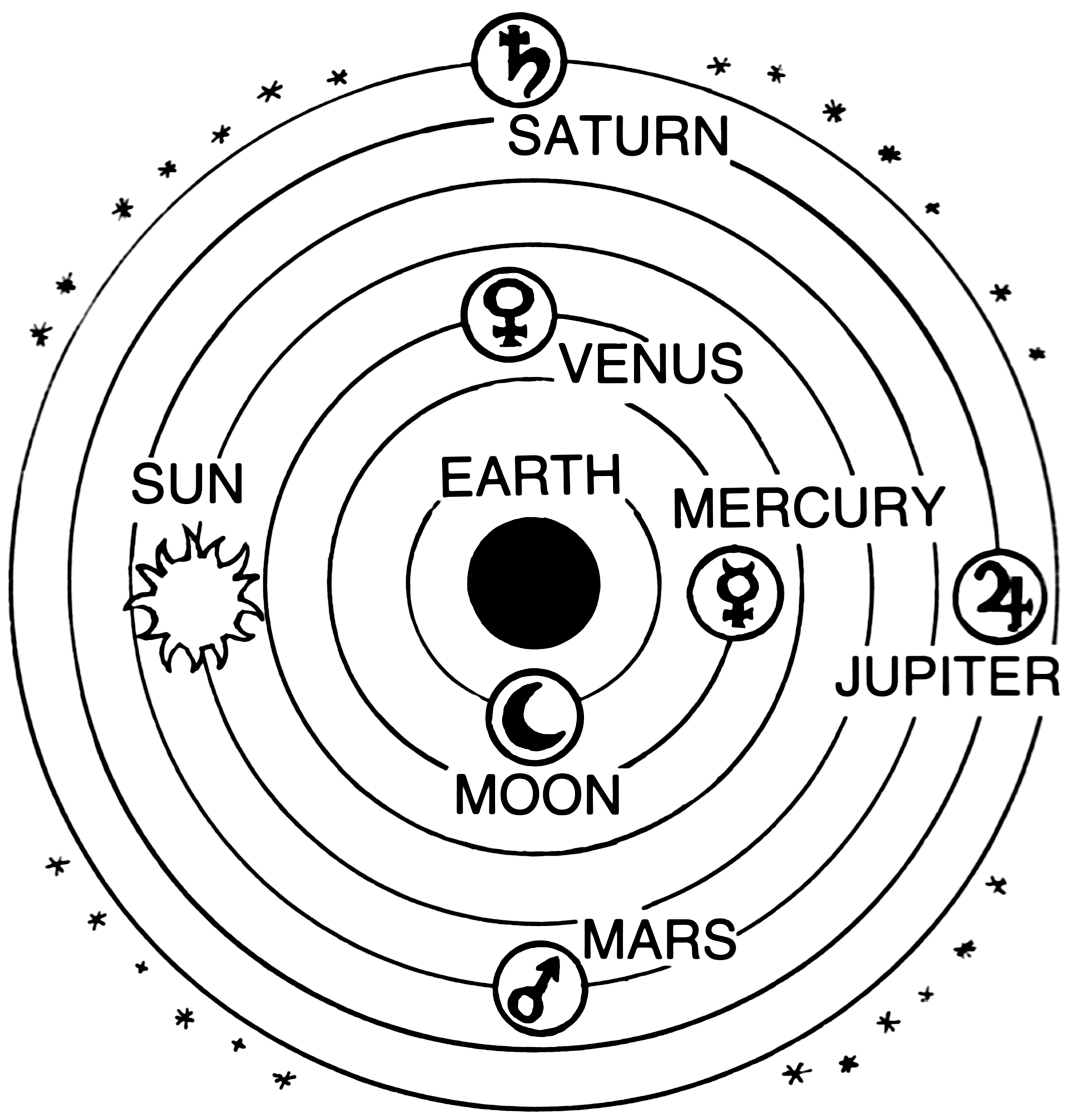
The Modern English word Earth developed, via Middle English, from an Old English noun most often spelled eorðe.It has cognates in every Germanic language, and their ancestral root has been reconstructed as *erþō. In its earliest attestation, the word eorðe was used to translate the many senses of Latin terra and Greek γῆ gē: the ground, its soil, dry land, the human world, the surface of the world (including the sea), and the globe itself.
The English name of Venus was originally the ancient Roman name for it. Romans named Venus after their goddess of love, who in turn was based on the ancient Greek goddess of love Aphrodite,who was herself based on the similar Sumerian religion goddess Inanna (which is Ishtar in Akkadian religion), all of whom were associated with the planet.
The ancients knew Mercury by different names depending on whether it was an evening star or a morning star. By about 350 BC, the ancient Greeks had realized the two stars were one.They knew the planet as Στίλβων Stilbōn, meaning "twinkling", and Ἑρμής Hermēs, for its fleeting motion,a name that is retained in modern Greek (Ερμής Ermis).
The ancients knew Mercury by different names depending on whether it was an evening star or a morning star. By about 350 BC, the ancient Greeks had realized the two stars were one.They knew the planet as Στίλβων Stilbōn, meaning "twinkling", and Ἑρμής Hermēs, for its fleeting motion,a name that is retained in modern Greek (Ερμής Ermis).T
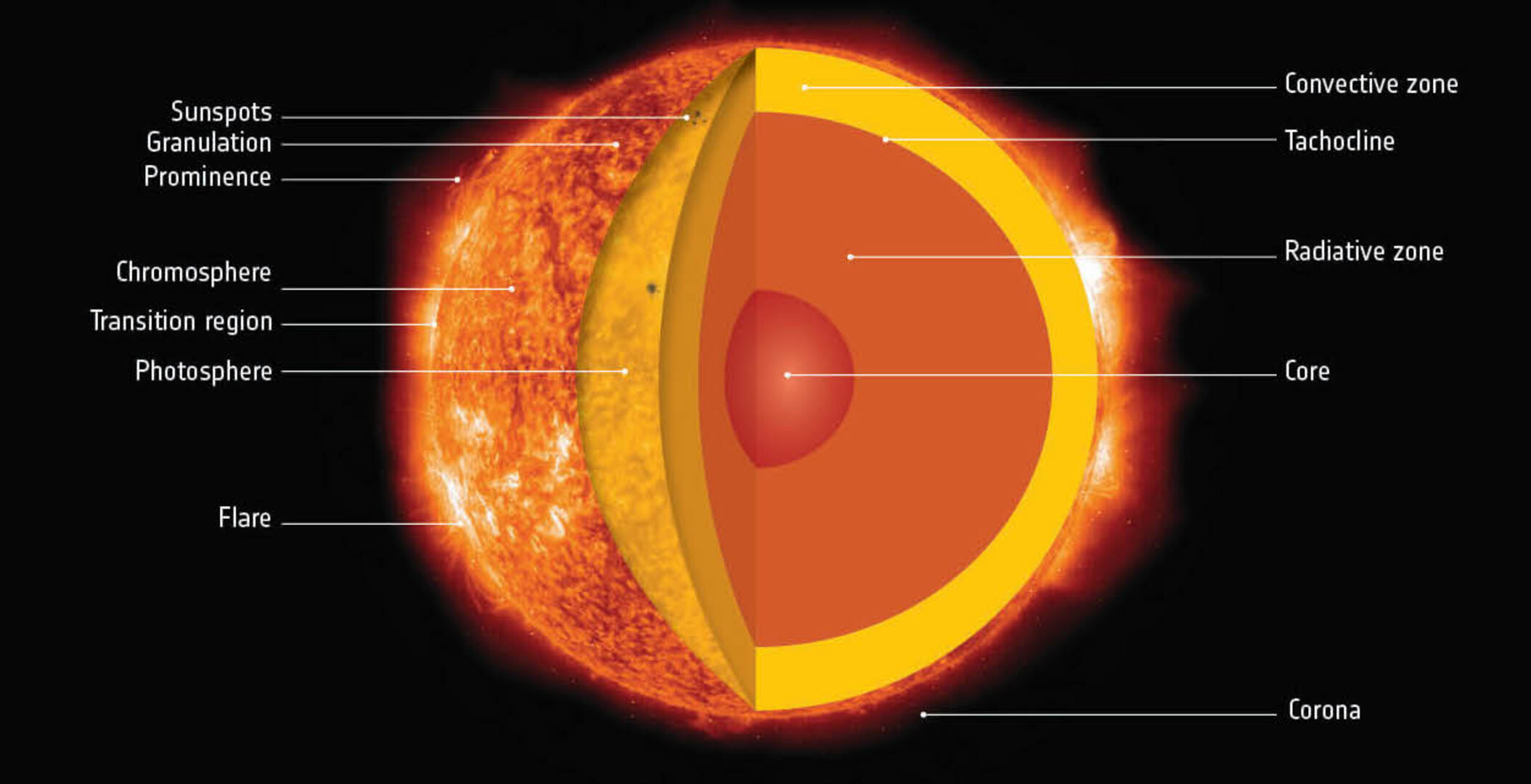
The sun is the most important star in our system.He is the reason we exist as humans because of his endless fusion of nuclear reactions.It is the most primal sight we can observe of pure raw energy being formed every millisecond.The sun is composed mostly out of helium(yes it was named after him) and hydrogen and little of other heavy elements.In simple words,inside the sun little explosions happen and they produce energy that transfers in outer space.Imagine how much energy he emmits so that we cannot fully see him with our own eyes.And he is 93 million miles away from us.Wow(In Keany Reeves’s voice) .Even with protective glasses we only see a white dot with white spikes.He is so cool (not funny) and amazing that in the past,humans praised of him as a god.In every civilazation,in any period of time the sun was the protagonist,the main event,the mvp,the vip,the center of the world(literarly).
The English word sun developed from Old English sunne. Cognates appear in other Germanic languages, including West Frisian sinne, Dutch zon, Low German Sünn, Standard German Sonne, Bavarian Sunna, Old Norse sunna, and Gothic sunnō. All these words stem from Proto-Germanic *sunnōn.This is ultimately related to the word for sun in other branches of the Indo-European language family, though in most cases a nominative stem with an l is found, rather than the genitive stem in n, as for example in Latin sōl, ancient Greek ἥλιος (hēlios).The sun is our only light source.Without him the Earth will be in total darkness.Well without the sun the earth wouldn’t be formed in the first place.The Sun formed about 4.6 billion years ago from the collapse of part of a giant molecular cloud that consisted mostly of hydrogen and helium and that probably gave birth to many other stars.This age is estimated using computer models of stellar evolution and through nucleocosmochronology.The result is consistent with the radiometric date of the oldest Solar System material, at 4.567 billion years ago.
Colors? Why?
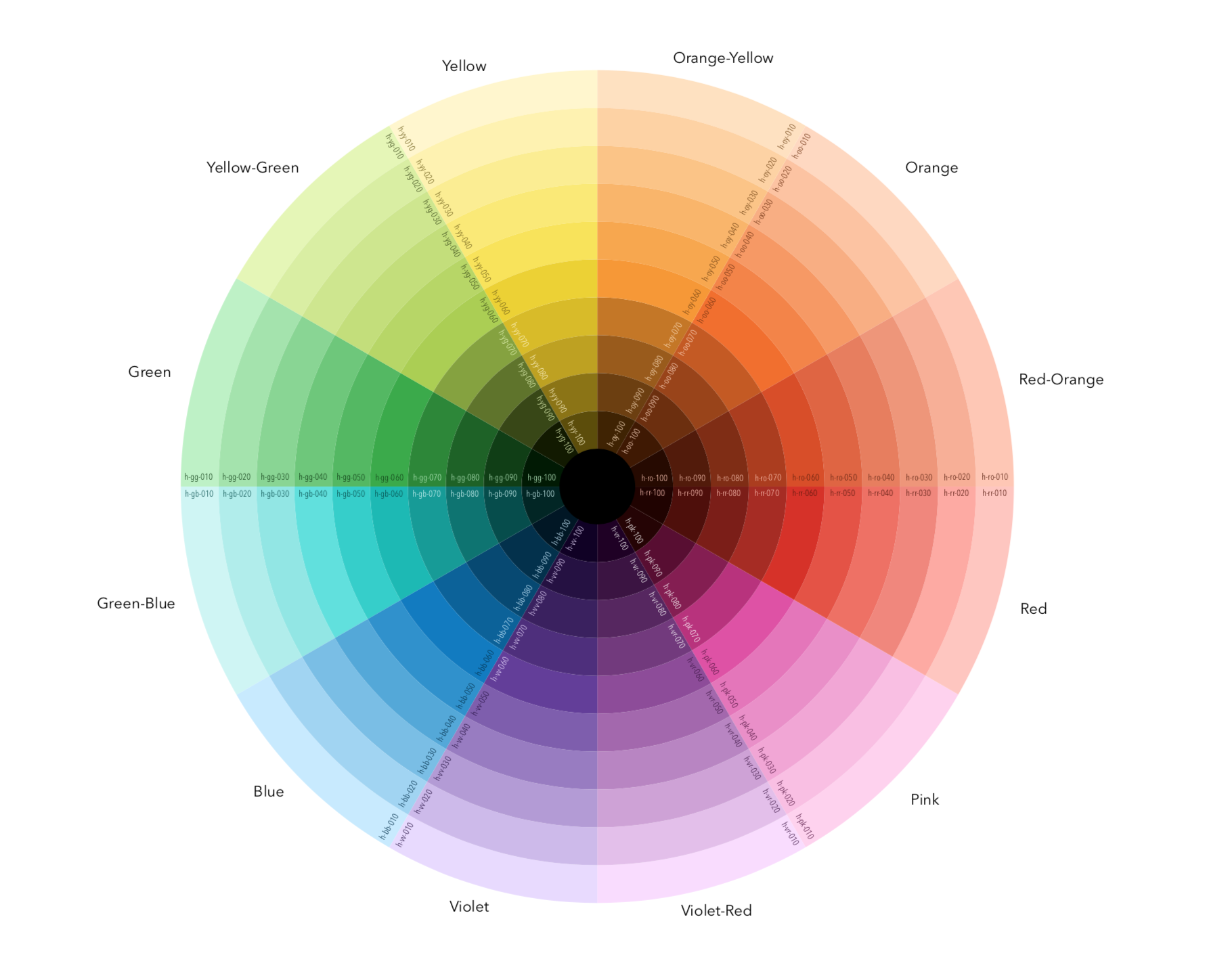
The reason that colors exist are because of our sun.Yeah I know mind blown.Color is the visual perception based on the electromagnetic spectrum. Though color is not an inherent property of matter, color perception is related to an object’s light absorption, reflection, emission spectra and interference. For most humans, colors are perceived in the visible light spectrum with three types of cone cells (trichromacy).So if we need a light source to see,the sun is the reason we see color.Wow(In Keanu Reeves voice).And This is one of the countless connections we have on our sun.

Photosynthesis
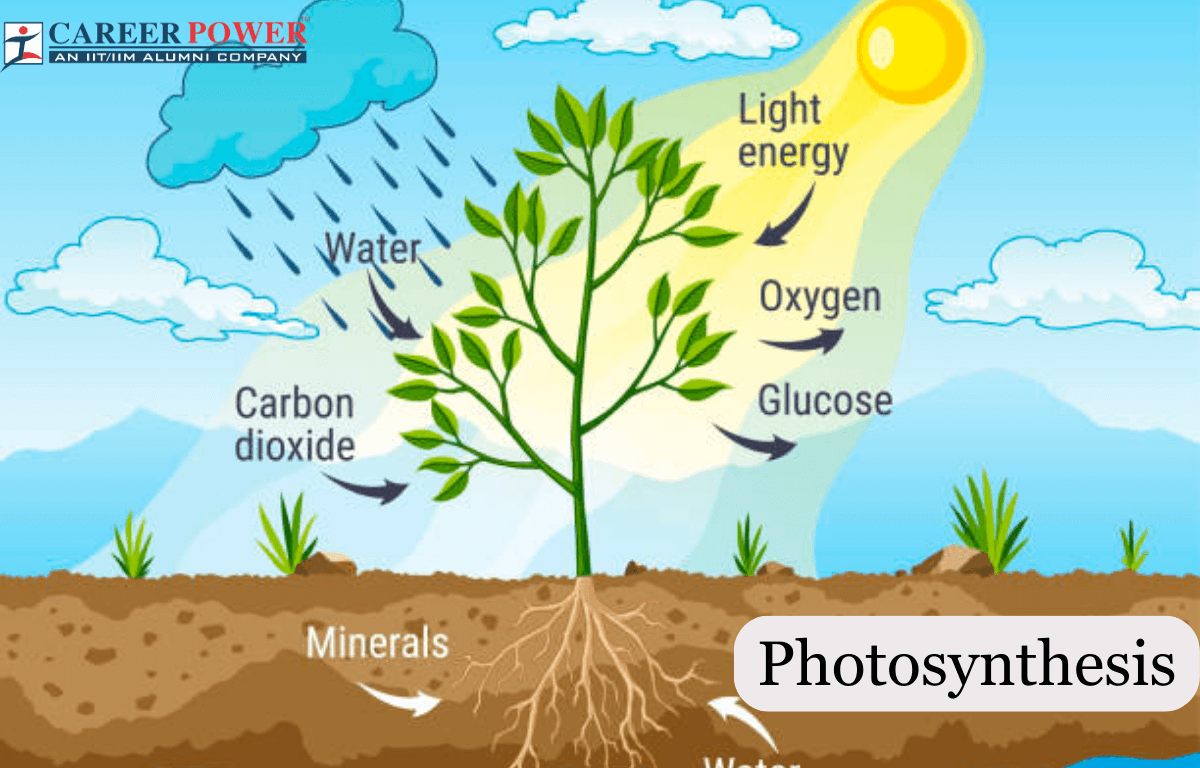
(Greek:Φώς(phos)/Φώτο(photo)+σύνθεση)is a system of biological processes by which photosynthetic organisms, such as most plants, algae, and cyanobacteria, convert light energy, typically from sunlight, into the chemical energy necessary to fuel their activities. Photosynthetic organisms use intracellular organic compounds to store the chemical energy they produce in photosynthesis.
Vitamin D
The major natural source of vitamin D is synthesis of cholecalciferol in the lower layers of the epidermis of the skin, through a photochemical reaction with Ultraviolet B (UV-B) radiation from sun exposure or UV-B lamps.Furthermore being at the sun is good for your mental health too.Psychologists claim that the sunlight releases seratonin in the brain.That hormone makes you feel good.Yeah(In Keanu Reeves’ voice).The sun is so glorious that when he is looking at you,you feel his glory too.And lack of sunlight can make you form Seasonal Affective Disorder (SAD).No i did not made that up it is real.Google it.So does the sun do anything bad to Earth? Or space?
And In the end he will devour every thing he touches...
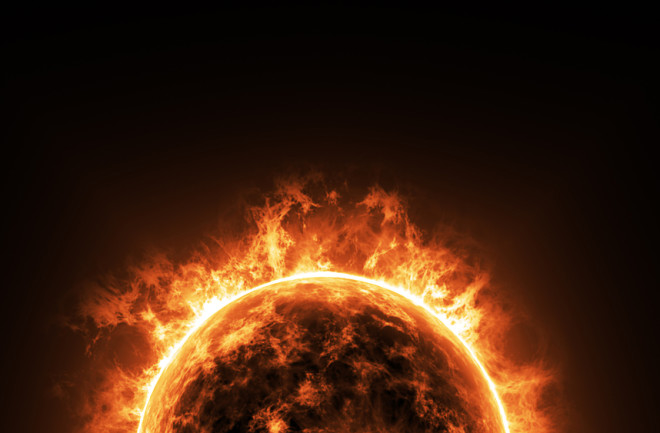
Like we said the sun is a star.A star “lives” and “dies”.Basically.Right now our sun is 4.6 billion years old.Young in the scientific perspective.So he will get older.Meaning when hydrogen fusion in the Sun’s core diminishes to the point where the Sun is no longer in hydrostatic equilibrium, its core will undergo a marked increase in density and temperature which will cause its outer layers to expand, eventually transforming the Sun into a red giant.And in the proccess he will “eat” everyting he touches.Asteroids.Meteors.Planets.Earth.To become a white dwarf.And eventually he will explode.A supernova? A black hole? We will never know for sure because this will happen in 10000000000000000000000000000000000000000000000000000 years and more.That is depressing and exciting at the same time.And that is Space.It does not care about our feelings.
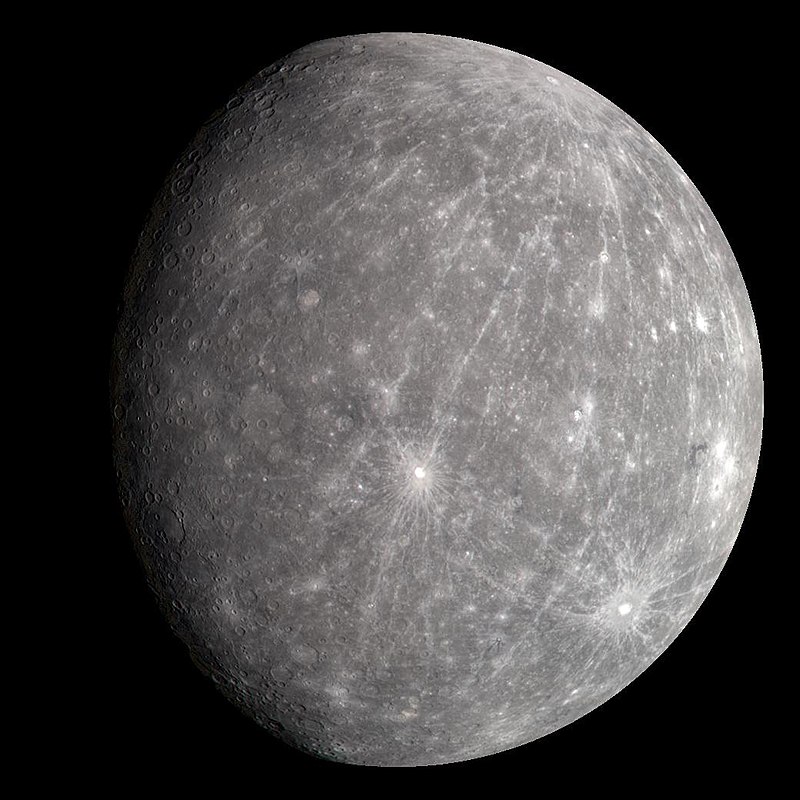
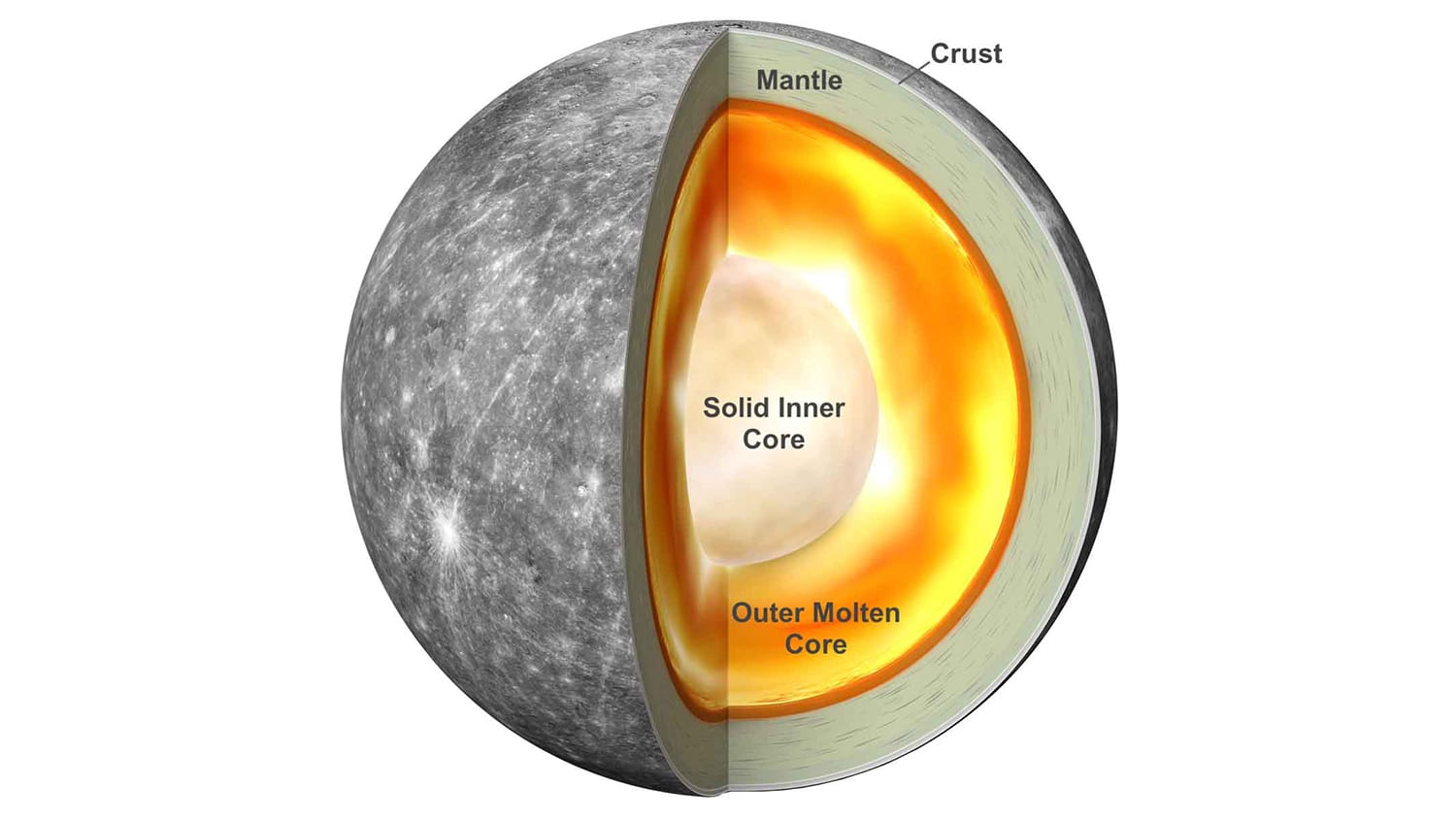
The ancients knew Mercury by different names depending on whether it was an evening star or a morning star. By about 350 BC, the ancient Greeks had realized the two stars were one.They knew the planet as Στίλβων Stilbōn, meaning “twinkling”, and Ἑρμής Hermēs, for its fleeting motion,a name that is retained in modern Greek (Ερμής Ermis).The Romans named the planet after the swift-footed Roman messenger god, Mercury (Latin Mercurius), whom they equated with the Greek Hermes, because it moves across the sky faster than any other planet.Mercury is classified as a terrestrial planet, with roughly the same surface gravity as Mars. The surface of Mercury is heavily cratered, as a result of countless impact events that have accumulated over billions of years. Its largest crater, Caloris Planitia, has a diameter of 1,550 km (960 mi) and one-third the diameter of the planet (4,880 km or 3,030 mi). Similarly to the Earth’s Moon, Mercury’s surface displays an expansive rupes system generated from thrust faults and bright ray systems formed by impact event remnants.Despite Mercury being the closest to the sun ironically he is not the hottest planet as we will see later.The first spacecraft to visit Mercury was NASA’s Mariner 10, which imaged about 45% of the surface.NASA’s MESSENGER spacecraft flew by Mercury three times and orbited the planet for four years before crashing on its surface at the end of its mission. The European Space Agency and JAXA launched a joint mission to Mercury in 2018.
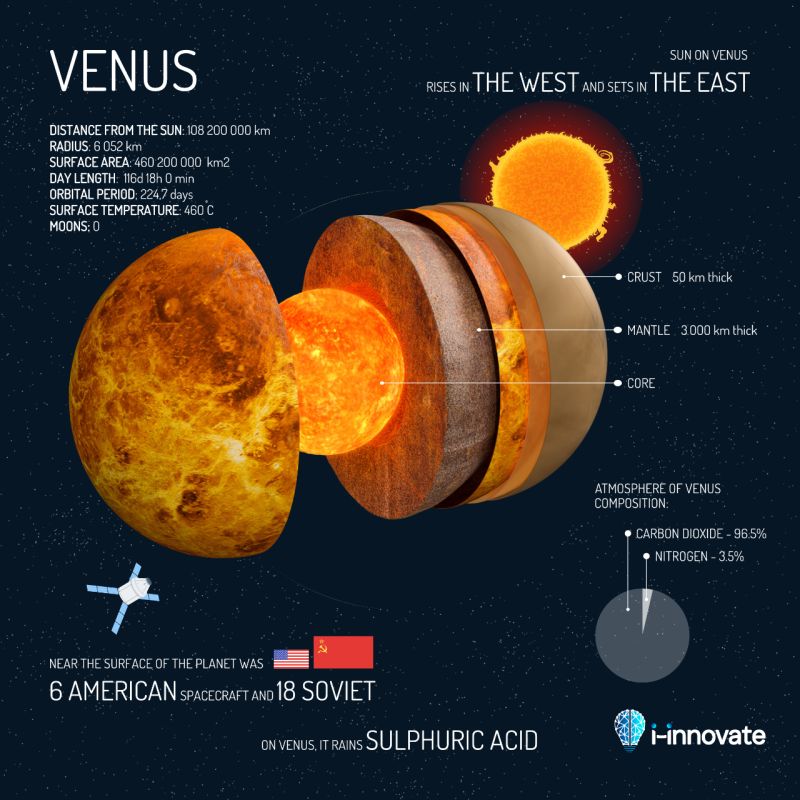
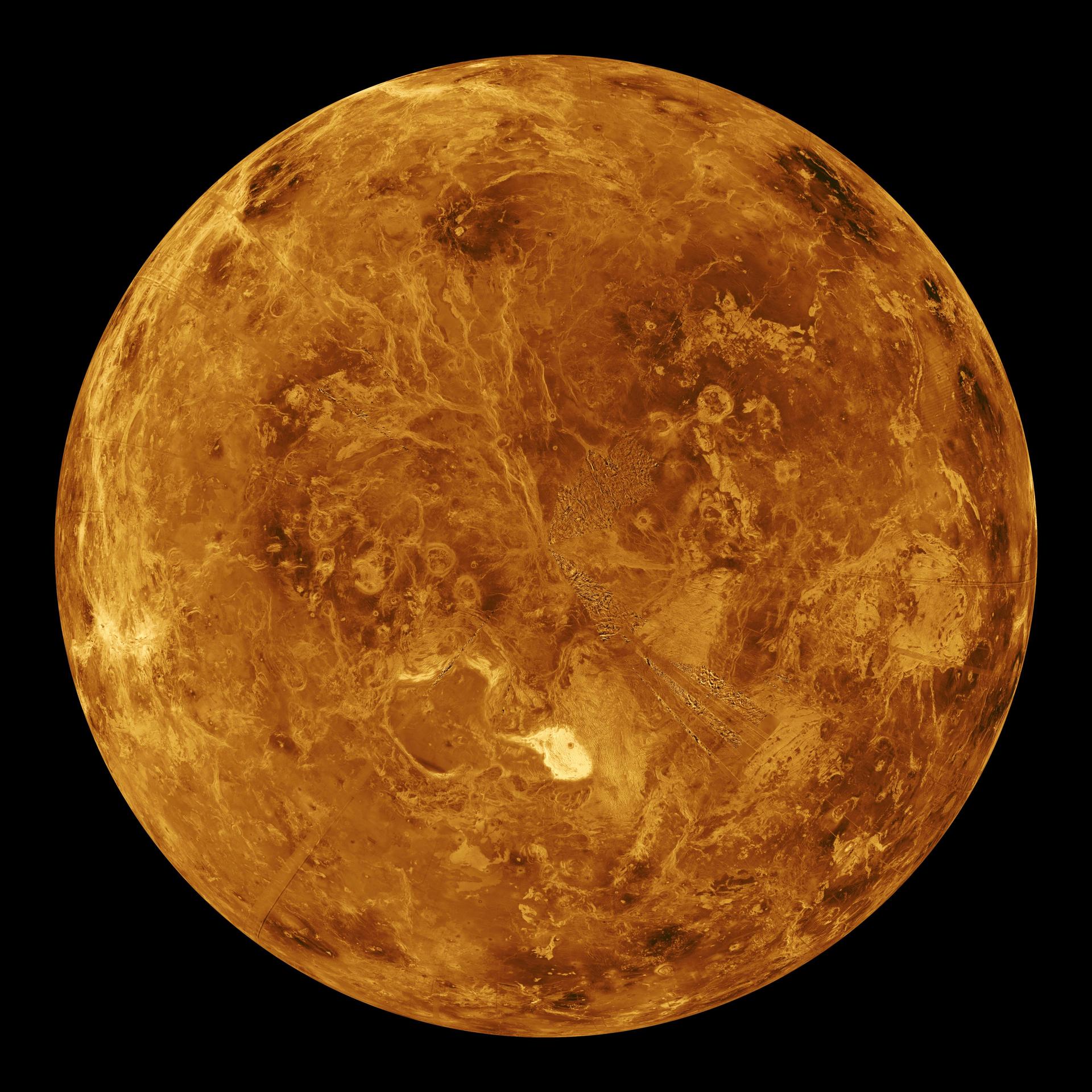
The English name of Venus was originally the ancient Roman name for it. Romans named Venus after their goddess of love, who in turn was based on the ancient Greek goddess of love Aphrodite,who was herself based on the similar Sumerian religion goddess Inanna (which is Ishtar in Akkadian religion), all of whom were associated with the planet.The weekday of the planet and these goddesses is Friday, named after the Germanic goddess Frigg, who has been associated with the Roman goddess Venus.Venus is the second planet from the Sun. It is a terrestrial planet and is the closest in mass and size to its orbital neighbour Earth. Venus is notable for having the densest atmosphere of the terrestrial planets, composed mostly of carbon dioxide with a thick, global sulfuric acid cloud cover. At the surface it has a mean temperature of 737 K (464 °C; 867 °F) and a pressure of 92 times that of Earth’s at sea level. These extreme conditions compress carbon dioxide into a supercritical state close to Venus’s surface.Ironicaly Venus is hotter than mercury despite being further from the sun in comparison with Mercury because of the carbon dioxide that traps the sunlight inside the atmosphere just like our green house effect.
Humans on Venus?
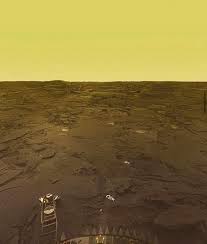
Fun fact most of people don’t know this but we actually have traveled to Venus.Well we didn’t set foot on Venus (yet) but On December 15, 1970 an unmanned Soviet spacecraft, Venera 7, became the first spacecraft to land on another planet. It measured the temperature of the atmosphere on Venus. In 1972, Venera 8 gathered atmospheric and surface data for 50 minutes after landing.Considering the time period we did this space mission the data we collect are still remarkable even nowdays. Pioneer Venus 2 contained the first spacecraft to land from the United States, the Day Probe. Soft landing on 9 December 1978.The most recent lander was the part of the Vega 2 mission, which soft landed on 15 June 1985.As much as Aphrodite/Venus was described as a beautifull godess and with unimaginable beauty,planet Venus is the exact opposite.Dark chunky surface,rough rocks,dense atmosphere full of carbon dioxyde and extremely hot.Yeah not the most beautifull description for a planet.It is one of the hardest planet to explore due to it’s extreme conditions.I am hopeful though that one day we can explore as human and chill in a cafeteria with a cup of espresso and enjoy the extremely close sun to the Venus surface.
The Modern English word Earth developed, via Middle English, from an Old English noun most often spelled eorðe. It has cognates in every Germanic language, and their ancestral root has been reconstructed as *erþō. In its earliest attestation, the word eorðe was used to translate the many senses of Latin terra and Greek γῆ gē: the ground, its soil, dry land, the human world, the surface of the world (including the sea), and the globe itself. As with Roman Terra/Tellūs and Greek Gaia, Earth may have been a personified goddess in Germanic paganism: late Norse mythology included Jörð (“Earth”), a giantess often given as the mother of Thor.
EARTH IS A SHPERICAL PLANET NOT FLAT.Now that this is out of the way,well,what can I say about our planet.There are so much things I want to say but I need to keep this as short as possible.Earth is astronising,beautifull,mesmerizing,gorgeous and scary.Scary?.Yes.Earthquakes,tsunamis,tornados,volcanoes,the deep ocean,the kraken,the Cthulu.Oops too much.Perhaps I will tell you some facts about our planet that most people don’t know.The first time that we started to care about the environment of earth was when we landed on the moon.That’s right,all the people in NASA and the American goverment felt so mortified seeing the beauty of the Earth for the first time and they started to act in favour on protecting it,this was later called the overview effect, emphasizing its beauty, uniqueness and apparent fragility.Even the astronauts were so amazed by the view of Earth,that after they returned home they felt so mortified and insignificant and started to take part in communial or activist groups to make Earth a better place.
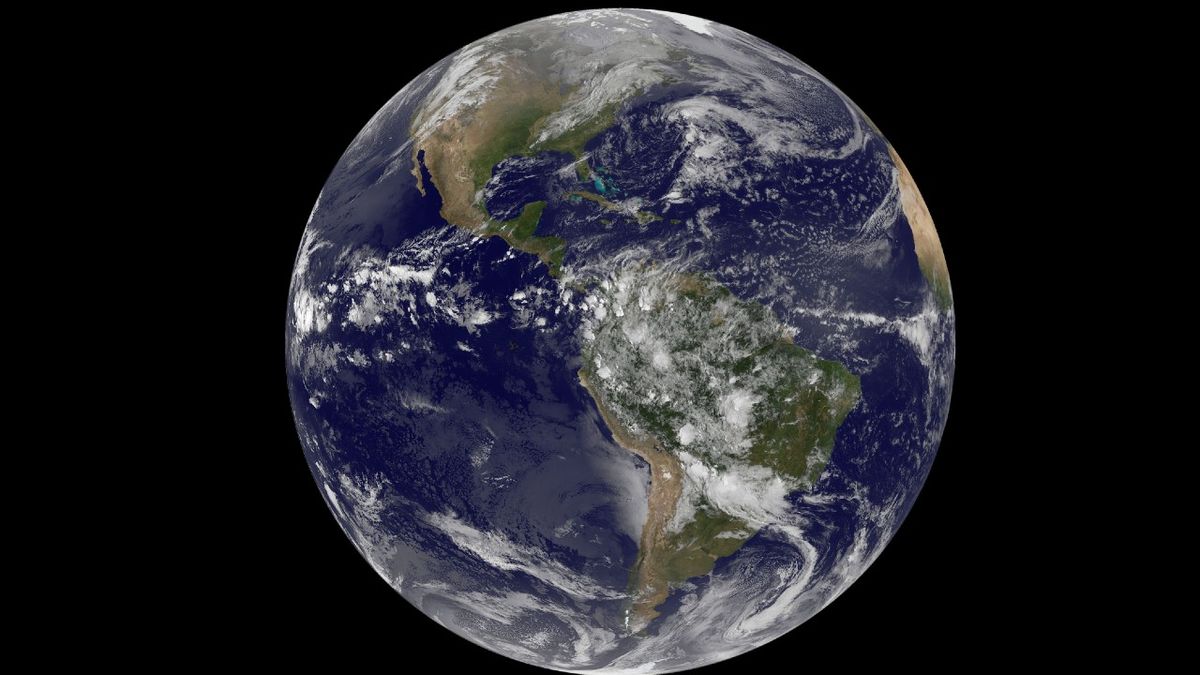
Earth is the third planet from the Sun and the only astronomical object known to harbor life. This is enabled by Earth being an ocean world, the only one in the Solar System sustaining liquid surface water. Almost all of Earth’s water is contained in its global ocean, covering 70.8% of Earth’s crust. The remaining 29.2% of Earth’s crust is land, most of which is located in the form of continental landmasses within Earth’s land hemisphere. Most of Earth’s land is somewhat humid and covered by vegetation, while large sheets of ice at Earth’s polar deserts retain more water than Earth’s groundwater, lakes, rivers and atmospheric water combined. Earth’s crust consists of slowly moving tectonic plates, which interact to produce mountain ranges, volcanoes, and earthquakes. Earth has a liquid outer core that generates a magnetosphere capable of deflecting most of the destructive solar winds and cosmic radiation.
Some unknown Facts about Earth
- Earth is the only planet that has plate tectonics. Without them, our planet will overheat just like Venus.
- The Oceans Hold $771 Trillion Worth of Gold