
Philosophy
The word philosophy comes from the Ancient Greek words φίλος (philos) ‘love‘ and σοφία (sophia) ‘wisdom‘. Some sources say that the term was coined by the pre-Socratic philosopher Pythagoras, but this is not certain.The meaning of philosophy changed toward the end of the modern period when it acquired the more narrow meaning common today. In this new sense, the term is mainly associated with philosophical disciplines like metaphysics, epistemology, and ethics. Among other topics, it covers the rational study of reality, knowledge, and values. It is distinguished from other disciplines of rational inquiry such as the empirical sciences and mathematics.
Chapter 0 : The Wise Human
According to scientists when we ‘think’ of something,whatever it is we philosophize.So do Homo-sapiens philosophize like us today?Technically yes.Human seperated themselves from beasts when they wondered by the term “Why”.By finding reason in things.Something that animals don’t do.We certainly are the latest version of the Homo-Sapien spiecies.Homo (from Latin homō ‘human’),also there is another terminology.In ancient greek myths when humans where created by Zeus they were created out of the dirt.Dirt=Χώμα in Ancient Greek.Χώμα (homa,homo?).We can see a connection.Futhermore Sapien is Latin and it means ‘Wise’.So according to science we are ‘The wise Human’.In short homo-sapiens evolved by solving problems,learning from them and wondering about it.Like playing chess but in the jungle.At first we were problem-solvers.Later when we created communities and little villages we started to ‘think’ more than killing animals and making houses,like 125,000 years ago.Of course our evolution is much more complex in a span of millions of years (300,000-70,000 years ago).Very long story for another time.After the short introduction we can go to the times where we actually started to ‘think’.
Chapter 1 : The Wise Human Rises
India
India=The name ‘India’ has its roots in ‘Indus,’ the Sanskrit term ‘Sindhu,’ referring to the mighty river that traversed this ancient land.The Greeks and Iranians adapted it as ‘Hindos’ or ‘Indos,’ signifying the region east of the Indus River. Notably, the name ‘Bharat’ also played a role.
The time when Homo-sapiens migrated from Africa they ‘took over’ Eurasia (125,000 years ago) was when we start to see the birth of civilazations. Propably the earliest philosofical istitution was Indian philosophy.It consists of philosophical traditions of the Indian subcontinent. The philosophies are often called darśana meaning, “to see” or “looking at.”Ānvīkṣikī means “critical inquiry” or “investigation.” Unlike darśana, ānvīkṣikī was used to refer to Indian philosophies by classical Indian philosophers, such as Chanakya in the Arthaśāstra.Indian philosophies share many concepts such as dharma, karma, samsara, dukkha, renunciation, meditation, with almost all of them focusing on the ultimate goal of liberation of the individual from dukkha and samsara through diverse range of spiritual practices (moksha, nirvana).[14] They differ in their assumptions about the nature of existence as well as the specifics of the path to the ultimate liberation, resulting in numerous schools that disagreed with each other. Their ancient doctrines span the diverse range of philosophies found in other ancient cultures.
China
The English name “China” was borrowed from Portuguese during the 16th century, and its direct cognates became common in the subsequent centuries in the West.It is believed to be a borrowing from Middle Persian, and some have traced it further back to the Sanskrit word चीन (cīna) for the nation. It is also thought that the ultimate source of the name China is the Chinese word 秦; Qín, the name of the Qin dynasty that ultimately unified China after existing as a state within the Zhou dynasty for many centuries prior. However, there are alternative suggestions for the etymology of this word.
Around the time of Indian philosophy in the region we now call China humans start to form philosophical constitutions too.Chinese philosophy is particularly interested in practical questions associated with right social conduct, government, and self-cultivation.Many schools of thought emerged in the 6th century BCE in competing attempts to resolve the political turbulence of that period. The most prominent among them were Confucianism and Daoism.Confucianism was founded by Confucius (551–479 BCE). It focused on different forms of moral virtues and explored how they lead to harmony in society.Daoism was founded by Laozi (6th century BCE) and examined how humans can live in harmony with nature by following the Dao or the natural order of the universe.Other influential early schools of thought were Mohism, which developed an early form of altruistic consequentialism,and Legalism, which emphasized the importance of a strong state and strict laws.
Egypt
The English name “Egypt” is derived from the Ancient Greek “Aígyptos” (“Αἴγυπτος“) (Πτέος του Αιγαίου=under the Aegean), via Middle French “Egypte” and Latin “Aegyptus“. It is reflected in early Greek Linear B tablets as “a-ku-pi-ti-yo”. The adjective “aigýpti-“/”aigýptios” was borrowed into Coptic as “gyptios“, and from there into Arabic as “qubṭī“, back formed into “قبط” (“qubṭ“), whence English “Copt”. The ancient Egyptian name of the country was (𓆎 𓅓 𓏏𓊖) km.t, which means black land, likely referring to the fertile black soils of the Nile flood plains, distinct from the deshret (⟨dšṛt⟩), or “red land” of the desert.This name is commonly vocalised as Kemet, but was probably pronounced [kuːmat] in ancient Egyptian.The name is realised as K(h)ēmə (Bohairic Coptic: ⲭⲏⲙⲓ, Sahidic Coptic: ⲕⲏⲙⲉ) in the Coptic stage of the Egyptian language, and appeared in early Greek as Χημία (Khēmía).Another name was ⟨tꜣ-mry⟩ “land of the riverbank”.The names of Upper and Lower Egypt were Ta-Sheme’aw (⟨tꜣ-šmꜥw⟩) “sedgeland” and Ta-Mehew (⟨tꜣ mḥw⟩) “northland”, respectively.
Theology and cosmology were central concerns in Egyptian thought. Perhaps the earliest form of a monotheistic theology also emerged in Egypt, with the rise of the Amarna theology (or Atenism) of Akhenaten (14th century BCE), which held that the solar creation deity Aten was the only god. This has been described as a “monotheistic revolution” by egyptologist Jan Assmann, though it also drew on previous developments in Egyptian thought, particularly the “New Solar Theology” based around Amun-Ra.These theological developments also influenced the post-Amarna Ramesside theology, which retained a focus on a single creative solar deity (though without outright rejection of other gods, which are now seen as manifestations of the main solar deity). This period also saw the development of the concept of the ba (soul) and its relation to god. According to Goldwasser (2006) the Hyksos king Apophis (c. 1550 BC) may have been “the first to introduce into the history of ideas, the option of a “single god and no other,” the first step on the long winding road of monotheism”.
Greece/Hellas
The English name Greece derives, via the Latin Graecia and Graecus, from the name of the Graeci (Γραικοί, Graikoí; singular Γραικός, Graikós = Son of Zeus), one of first ancient Greek tribes to settle Magna Graecia in southern Italy.The native name of the country in Modern Greek is Ελλάδα (Elláda, pronounced [eˈlaða]). The corresponding form in Ancient Greek and conservative formal Modern Greek (Katharevousa) is Ἑλλάς (Hellas, classical: [hel.lás], modern: [eˈlas]). This is the source of the English alternative name Hellas, which is mostly found in archaic or poetic contexts today.
Because I am Greek and I know more about Greek philosophy than most other philosophies we will focus more about how it was formed and what it represents.It is also common knowledge that Ancient Greek philosophy is the most influential study of our science.Not to say it is original in fact many ideas are borrowed or influenced or corresponed with Indian,Chinese and Egyptian ideas,but Greek philosophers really pushed the boundaries of human thinking,creating concepts that we as modern humans in the western part of the world use even to this day.
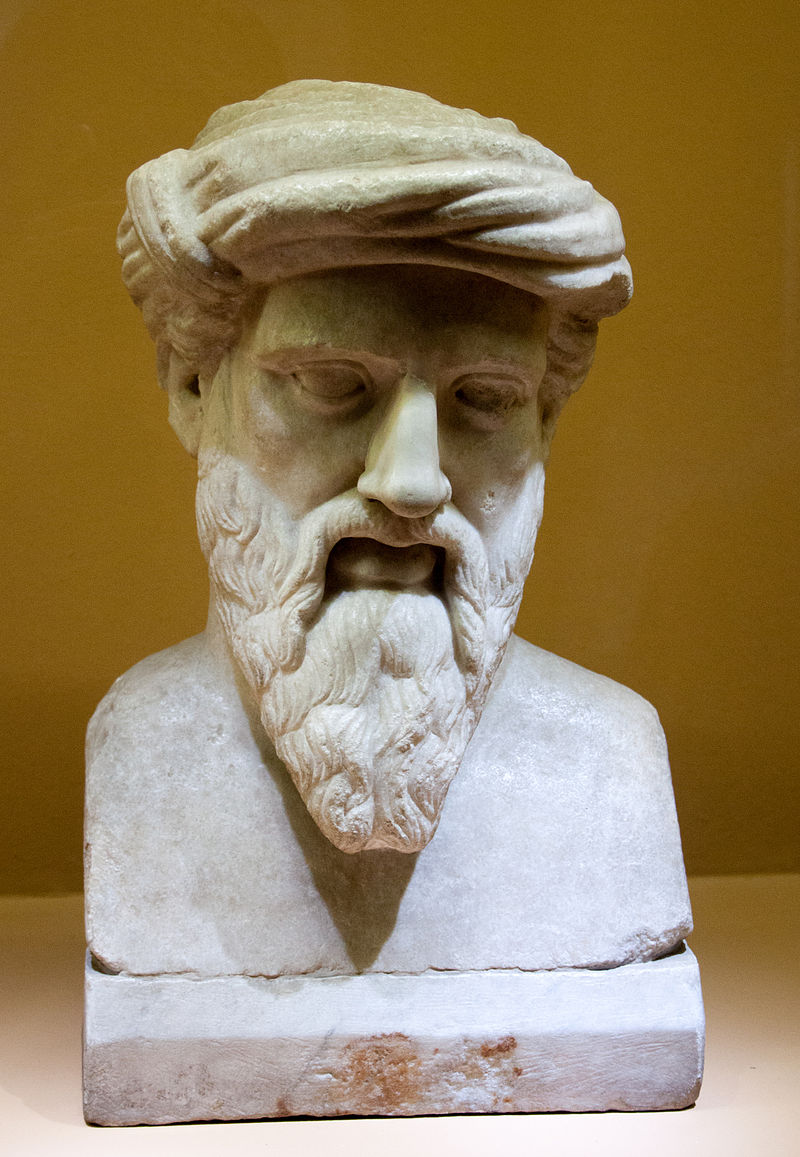
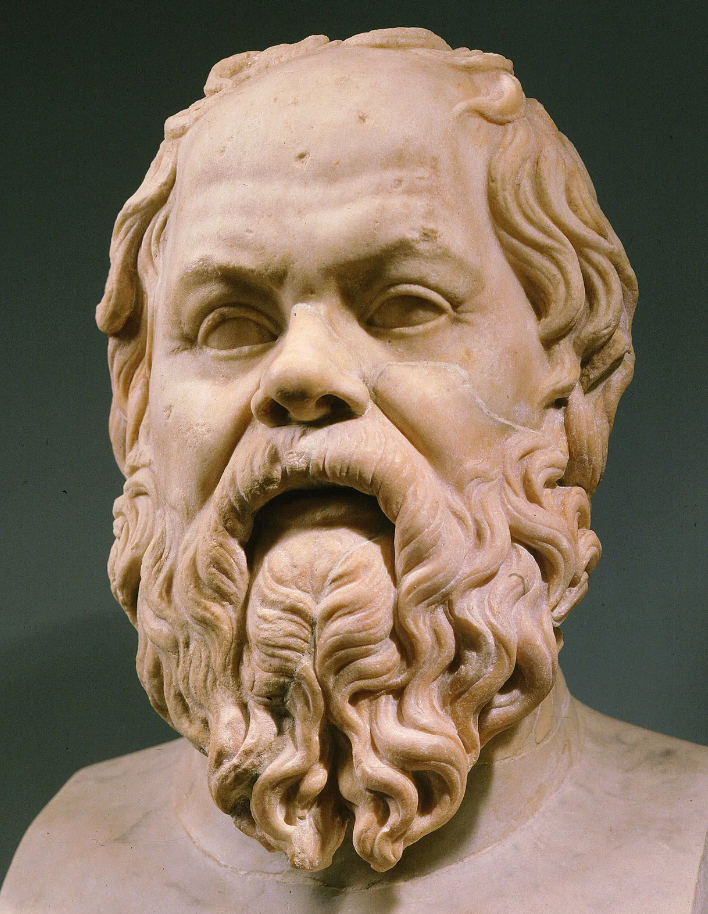
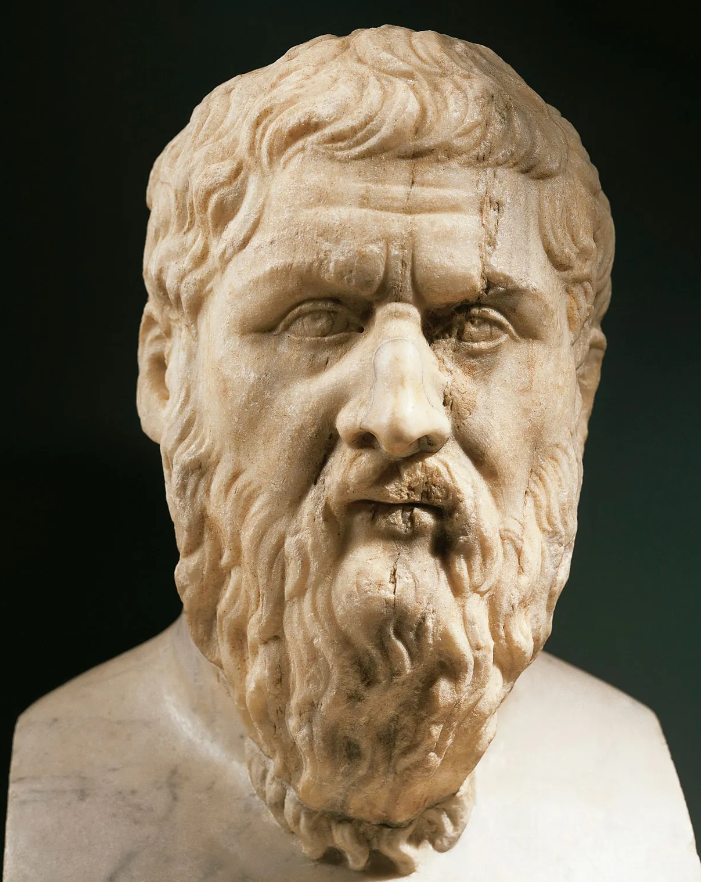
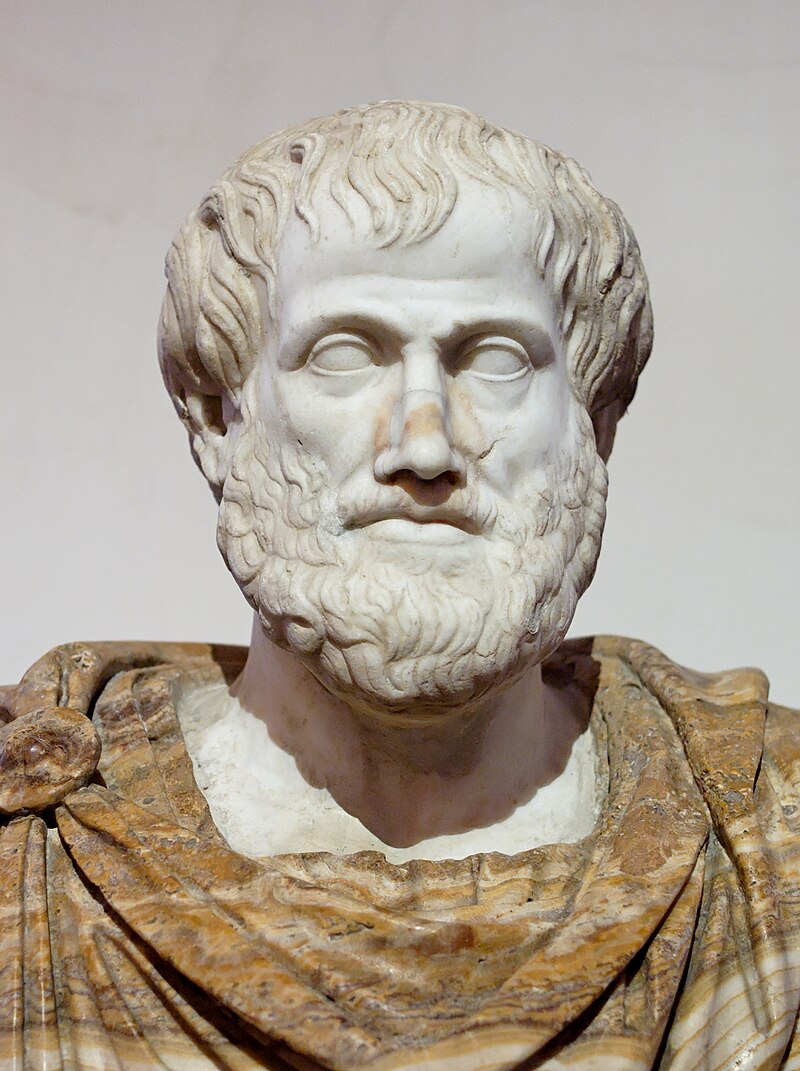
Western philosophy originated in Ancient Greece in the 6th century BCE with the pre-Socratics.(Pythagoras of Samos was the most well known at that time.) They attempted to provide rational explanations of the cosmos (smiles with pride again! =D) as a whole.The philosophy following them was shaped by Socrates (469–399 BCE), Plato (427–347 BCE), and Aristotle (384–322 BCE). They expanded the range of topics to questions like how people should act, how to arrive at knowledge, and what the nature of reality and mind is. The later part of the ancient period was marked by the emergence of philosophical movements, for example, Epicureanism, Stoicism, Skepticism, and Neoplatonism.The medieval period started in the 5th century CE. Its focus was on religious topics and many thinkers used ancient philosophy to explain and further elaborate Christian doctrines.
Chapter 2 : The Basics
«Έν οἶδα ὅτι οὐδὲν οἶδα» =One thing I know is that I don’t know.This phrase was on Plato’s work ”The apology” ,in which Socrates explained that his friend Chaerephon went to the oracle of Delphi and asked whether there was anyone wiser than Socrates. The oracle told Chaerephon that no one is wiser than Socrates. Socrates was baffled by this news as he found it very hard to believe that he was the wisest man. Socrates was aware of his own ignorance; he did not think he was wise. Thus, he decided to attempt to refute the oracle by finding someone who was wiser than himself. He spoke to people with different profession’s, such as politicians, poets, and craftsmen; however, he found that they only possessed “human wisdom”. For example, the artisans were only wise in their art, but they lacked wisdom in what Socrates referred to as “higher things” or “human excellence.” Socrates found that:
“I am wiser than this man, for neither of us appears to know anything great and good; but he fancies he knows something although he knows nothing; whereas I, as I do not know anything, so I do not fancy I do.”
This therefore shows that because they all claimed they were wise this made them not so wise, whereas Socrates never claimed to be wise as he was conscious of his own ignorance about higher matters; thus he had a type of wisdom. Socrates therefore saw it as his responsibility to examine himself and others: that is to live the life of a philosopher.
"I think, therefore I am" -René Descartes-
A thought is a representation of something. A representation is a likeness—a thing that depicts another thing by having characteristics that correspond to that other thing. For example, a picture, image, imprint, or mold of an object is a representation of that object.Or thought and thinking refer to cognitive processes that can happen independently of sensory stimulation. Their most paradigmatic forms are judging, reasoning, concept formation, problem solving, and deliberation.
A map is another example of a representation. The mind is a kind of map. The brain, and its functional product the mind, evolved as a map of the body’s relation to its external environment. Fundamentally, our thoughts are maps representing and corresponding to things that our brains have either perceived with our senses, felt with our emotions, or formed as an action plan (e.g. forming an image of reaching for a ripe fruit on a tree branch). All of these are electrochemically mediated processes. Thoughts may be fleeting, or they may later be consolidated as memories. Memory too is a physical process, encoded by structural molecular changes in neuronal connections.So in order to think we need something to spark this process.Facts-Analysis-Information.Input-Process-Output.
“Knowledge is Power” – Francis Bacon / Thomas Hobbes-
Philosophers are obsessed with information.It is our fuel.Food for thought as they say.(Who are They?).Facts,theories,information.The more information you know,the more you understand the world and the wiser you become.We are like a computer in many ways.The more numbers you give to the computer the more calculations it can calculate.(How do we learn calculations?).Knowledge makes us think because we compare our existing knowledge with new.And that is the key of becoming a better human.Smarter.Sharper.Logical.But as they say knowledge is power ONLY if you acknowledge it.(Who are They again?).Otherwise it is just meaningless.Furthermore you have to understand what knowledge is benificial and isn’t.(Does bad knowledge exist?).Socrates was a teacher that according to Plato (Socrates’ student) never told his students to write down his teachings (Plato was horrible at that).He wanted his students to act according to his observations,understand them and find if they are true.Thought without act is just a thought.So to be honest with yourself you have to put your knowledge to the test.(Yes but who are you?)(Who am I?).Living a live when you know everything and doing nothing is life full of waste.(What if I am lazy?)
What is Wisdom?
From Middle English wisdom, from Old English wīsdōm (“wisdom”), from Proto-Germanic *wīsadōmaz (“wisdom”), corresponding to wise + -dom or wise + doom (“judgement”). Another word that is related Φρόνισις (fronisis) as it is in Ancient Greek that derives from Φρήν(frin)=Mind,Soul.
Wisdom is theory+practise.The more you know you the better you know yourself.Life in general is memories and experiences.Through our experiences we form memories and make choices based on them.We are a collection of our choices.In order to make better choices we need to seperate ourselves from our body.The body functions according to nature.And many times we get false signals from our senses.Senses produce feelings that make us choose instictively and harsly.For example we see with our eyes a long long road far ahead.At a long distance the road gets smaller and smaller.Like a door that closes.But the more we cross the road the longer and bigger it becomes.That is a natural phenomenon of perspective.The further the point the smaller it seems.So our visionary system “tricked” us to think the road is smaller.This one example demonstrates how our senses work against form our mind.Or let’s say that we have to interpret the stimuli from our senses in order to make sense.(Pun intended).A wise man is man that knows himself.(How do I know that?)(What is a “Self”?).
Know Thyself
“Know thyself” (Greek: Γνῶθι σεαυτόν, gnōthi seauton) is a philosophical maxim which was inscribed upon the Temple of Apollo in the ancient Greek precinct of Delphi. The best-known of the Delphic maxims, it has been quoted and analyzed by numerous authors throughout history, and has been applied in many ways. Although traditionally attributed to the Seven Sages of Greece, or to the god Apollo himself, the inscription likely had its origin in a popular proverb.We eventually come to the conclusion that the more we start to question the world the more we start to understand ourselves.Still we don’t know about the ‘Self’ aspect of human nature.We do know that something drives us to keep searching. -“Do what thou wilt shall be the whole of the Law”-.This means that I do what my will tells me to do.Socrates mentioned his will as a “demon” (yes a demon but wait,there is more…) he followed what his reasoning was telling him to think and act.Thus the quote “By the demon self” (Greek:Κατά του δαίμονα εαυτού,kata tou daimona eautou).In ancient Greece the word “Demon” (Δαίμονας) derives from the verb “δαίομαι”(daiomai) meaning to deliver,share,distribute.Basically demons were divine entities that delivered knowledge and reasoning to humans guiding them to a moral path to life.We all had a “demon” as a protector of our souls and when we were troubled about something,the demon/rationality would tells us what to do.Unfortunately when religion conquered the way humans governed nations,thinking and questioning god became dishonorable even forbidden ,so those who followed their “demon”/mind they were called rebels,heretics and they were hunted as worshipers of evil.The word “demon” eventually was opposed to the religious consensous thus being something evil and dangerous.Those who claimed than the “the demon tells me..” they where seen as monsters or entities that want to harm others because they defy the word of god.So instead of trying to understand ourselves we start to poison ourselves.Pretty sad indeed.